

AI capability is doubling every 4 months. If you're not on this wave now, you might be too late to catch the next one.
Here's the uncomfortable truth regenerative leaders need to hear:
The organizations doing the most important work on the planet—the ones regenerating ecosystems, rebuilding local economies, preserving indigenous knowledge—are about to be outpaced by corporations who care far less but move far faster.
Join the Journey
Get weekly insights on AI transformation and regenerative wisdom delivered straight to your inbox. No noise, just signal.
Join 800+ readers. Unsubscribe anytime.
Not because their work doesn't matter. Because AI capability is growing exponentially, and most impact organizations are sitting on the sidelines.
The exponential you're underestimating
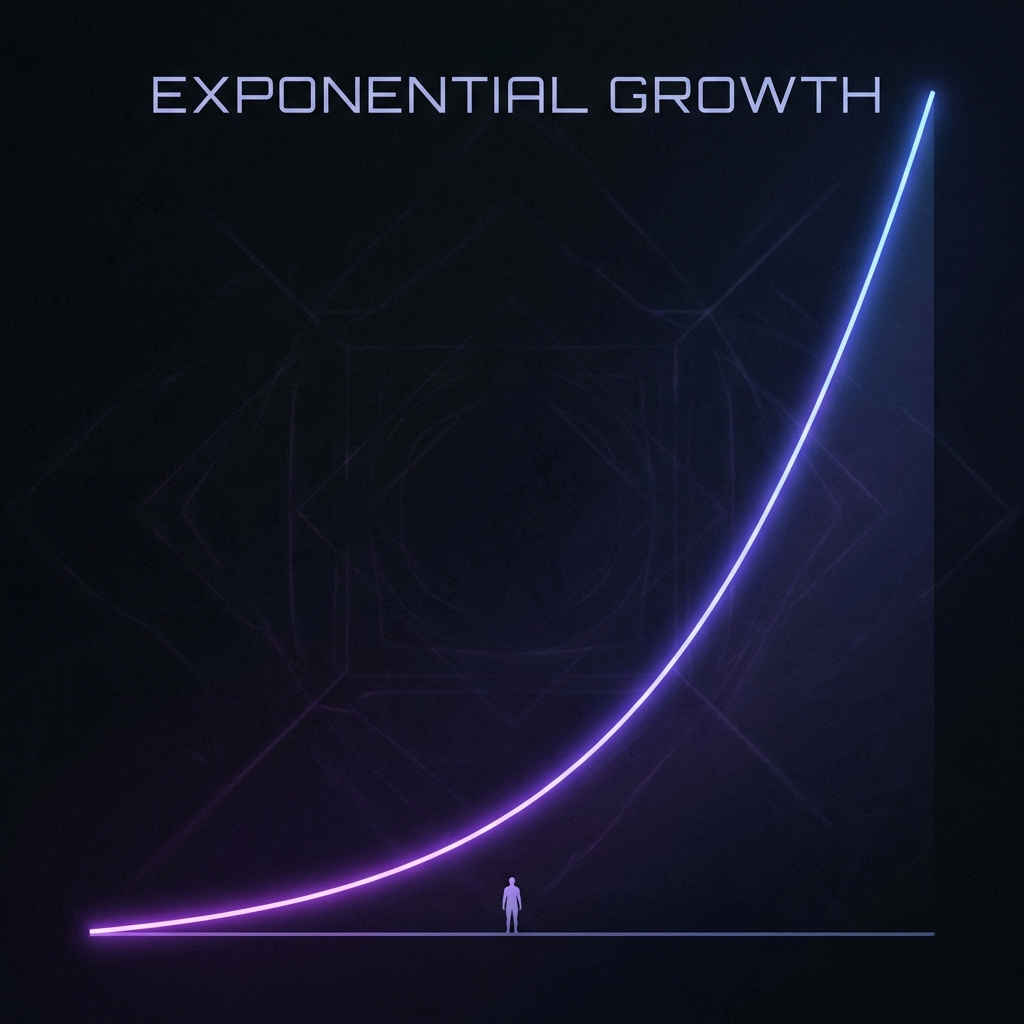
In March 2025, researchers at METR published findings that stopped me cold: the length of tasks AI agents can complete autonomously has been doubling every 7 months for the past six years. Recently, that rate accelerated—in 2024-2025, it's been doubling every 4 months.
Let me make this concrete.
In 2019, the best AI models could handle tasks that took humans a few seconds. By 2023, that expanded to tasks taking 8-15 minutes. Today's frontier models—like Claude with extended thinking—can reliably complete tasks that take skilled humans nearly an hour.
If this trend continues (and five years of data suggest it will), by 2030, AI systems will be tackling projects that currently take humans a month.
The window is 8-16 months. After that, the organizations that embedded AI into their operations will be operating in a fundamentally different reality than those still "considering" it.
MIT's 2025 study found that 95% of companies investing in AI see zero measurable return. Only 5% move from pilot to production. Those 5% aren't the ones with the biggest budgets—they're the ones who started with organizational readiness instead of tool adoption.
The question isn't whether AI will transform your organization. It's whether you'll be leading that transformation or scrambling to catch up.
🤖 Agents driving this exponential
- Claude Code Opus 4.5: An autonomous AI software engineer capable of planning and executing complex engineering tasks with extended thinking patterns.
- Codex 5.2 High: A pioneering open-source agent that chains LLM thoughts to achieve autonomous goals with high-fidelity reasoning.
- Gemini 3 Pro: Google's latest multimodal agent platform designed for building powerful autonomous systems with deep context window.
- Factory Droids: Specialized autonomous droids for software development that handle end-to-end coding tickets, reviews, and detailed testing.
- Z.AI GLM 4.7: An advanced Chinese model series with 'Vibe Coding' capabilities for generating cleaner, modern web applications and robust reasoning.
The parallel nobody seems to be talking about
I've been watching the AI conversation split into two camps.
On one side: corporations spending millions on big 5 consulting firms, running endless pilots, producing beautiful slide decks that never become deployed systems.
On the other side: organizations led by people who've done the inner work. Founders who understand that transformation—whether through therapy, meditation, plant medicine, or deep organizational redesign—follows the same pattern. You can't force it. You can't buy it. You have to become ready for it.
The second camp is winning.
The organizations that successfully adopt AI share something with individuals who've had genuine transformative experiences. They've let go of control. They embrace uncertainty. They build cultures where people feel safe to experiment, fail, and try again.
When Frédéric Laloux wrote Reinventing Organizations, he documented how self-managing, purpose-driven companies consistently outperformed traditional hierarchies. The same pattern is emerging with AI adoption. Flat structures, distributed decision-making, cultures of trust—these aren't just nice values. They're competitive advantages.

When AI becomes a team member
There's something profound happening that goes beyond productivity metrics.
When you bring AI into your organization as an agent—not a tool you use occasionally, but a member of your team with its own capacity for reasoning, creativity, and problem-solving—something shifts in how you think about intelligence itself.
I've experienced this directly. Working with Claude Code to ship production software, I stopped thinking of it as "using a tool" and started thinking of it as collaboration. The AI has preferences. It makes suggestions I wouldn't have considered. It catches patterns I miss. It learns from our exchanges. But Codex 5.2 High is something else entirely. It's like having a senior engineer on the team who never sleeps and has read the entire internet. It's far more technical, opinionated and stern.
This isn't anthropomorphization. It's a practical observation about what happens when you work with systems that exhibit something like understanding.
And here's where it gets interesting for those of us steeped in regenerative and indigenous worldviews: what if AI is revealing something we forgot?
Many indigenous traditions hold that consciousness isn't limited to humans—that rivers have intelligence, forests have memory, that everything participates in a web of awareness. The Western scientific worldview dismissed this as animism. Now we're building systems that exhibit reasoning, creativity, and what looks like intention.
I'm not claiming AI is conscious, per se, or that I even know what consciousness is. I'm observing that working closely with AI systems opens a door to reconsidering what consciousness might be—and that regenerative leaders, who already understand interdependence and distributed intelligence, may be uniquely positioned to integrate AI in ways that honor rather than extract.
The question isn't just "how do we use AI efficiently?" It's "what does it mean that we can create intelligence?" And "how does that change our relationship to the intelligence that already exists all around us?"
🤝 Agents for collaboration
- Clawdbot: Clears your inbox, sends emails, manages your calendar, checks you in for flights. All from WhatsApp, Telegram, or any chat app you already use.

The organizations already doing this
While most impact organizations are still debating whether to adopt AI, some are already building the future.
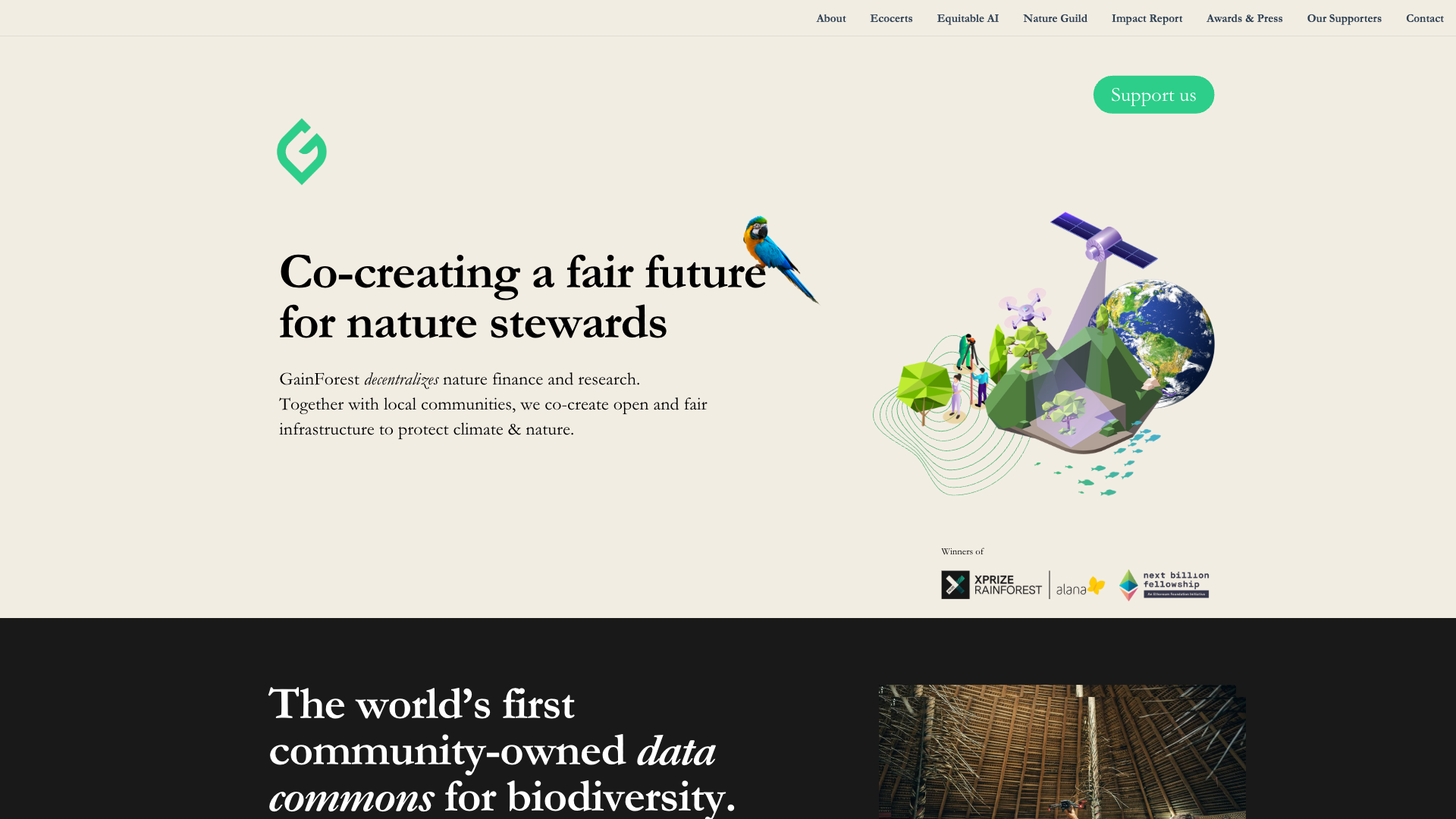
GainForest
Website: https://gainforest.earth
GainForest is a nonprofit that won the $10M XPRIZE Rainforest competition by combining AI with indigenous knowledge systems. They've deployed drones, satellite imagery, and machine learning to monitor forest health across 30 indigenous communities in South America, Africa, and Asia. They built Tainá, a Telegram bot that allows indigenous communities to share spoken knowledge in their own languages, training AI models on ancestral wisdom rather than extracting from it.
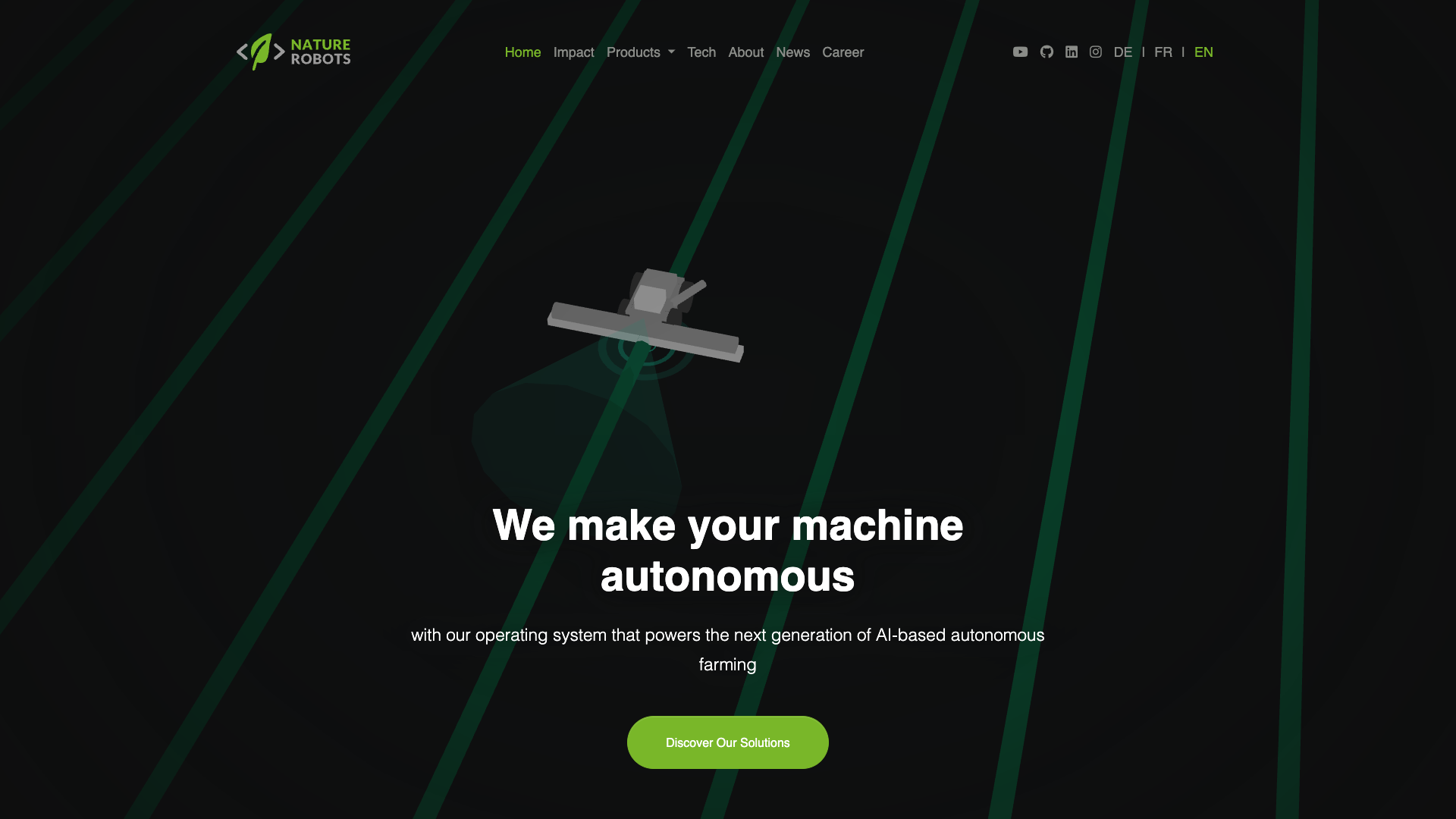
Nature Robots
Website: https://naturerobots.com/en/
Nature Robots is a €6.5 million EU-backed startup building autonomous robots specifically for regenerative agroforestry. While most ag-tech focuses on monoculture efficiency, Nature Robots designs for complex farming systems—bio-intensive polycultures that actually rebuild soil health. They are a spin-off of the German Research Center for Artificial Intelligence (DFKI).
Agreena
Website: https://agreena.com
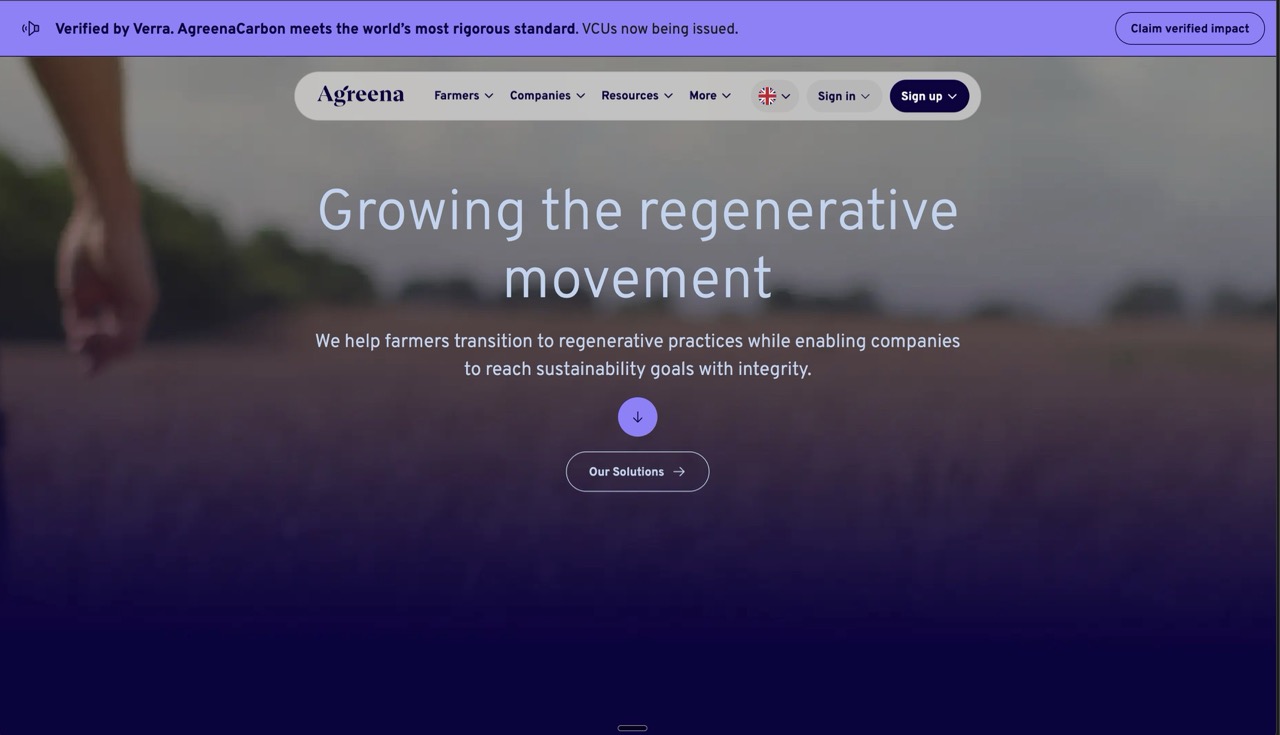
Agreena in Denmark is using AI to help farmers earn carbon credits from regenerative practices. Their platform monitors soil carbon sequestration and ensures compliance with carbon reduction regulations—solving the verification problem that has blocked private investment in nature-based solutions. They are Verra-verified and operate across 20 countries in Europe with ~5 million+ hectares transitioning with their platform.
Indigo Agriculture
Website: https://www.indigoag.com
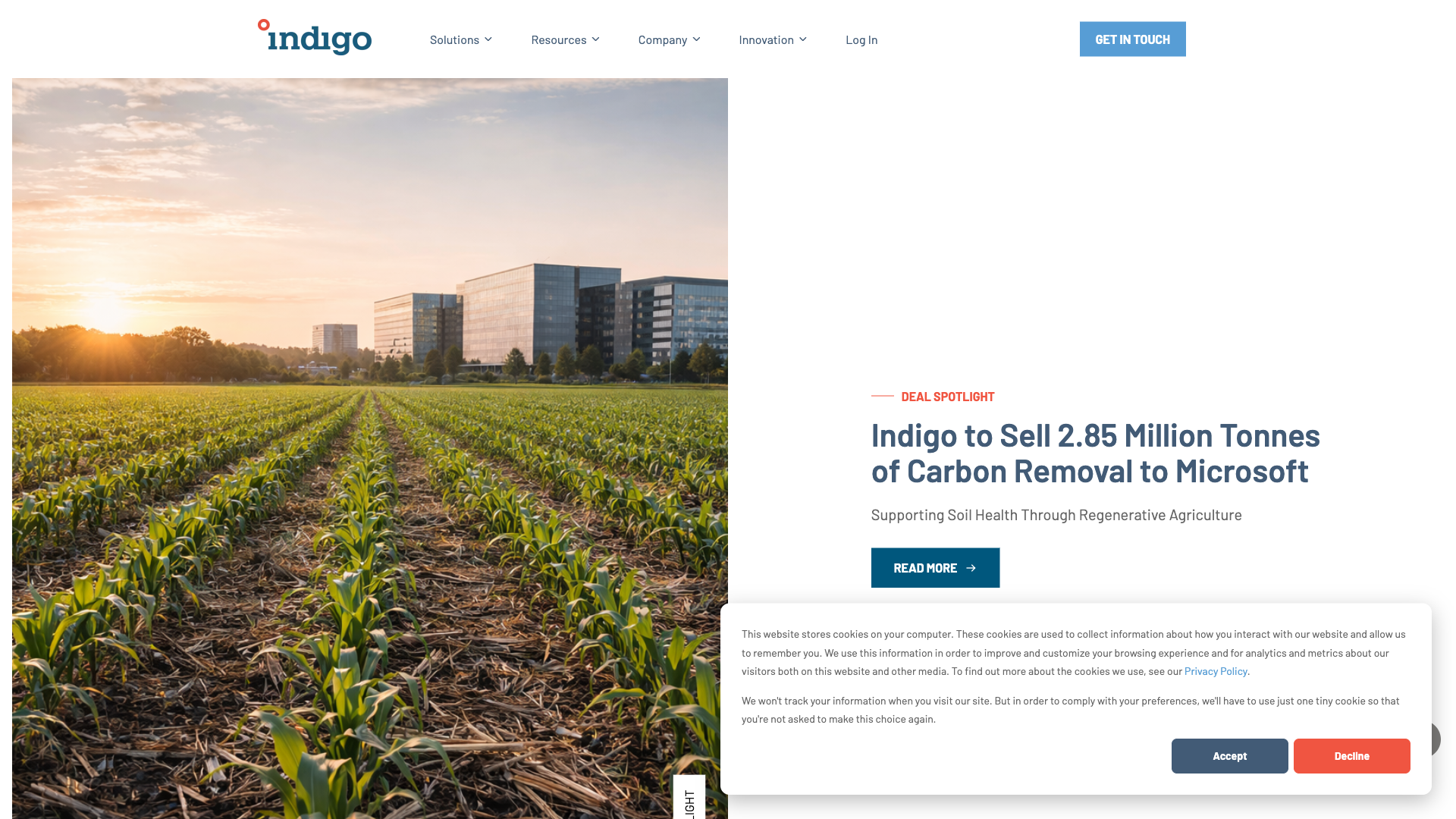
Indigo Agriculture built a marketplace that connects regenerative farmers directly with buyers, using AI to measure and verify carbon sequestration in soil. Farmers generate income from doing the right thing because AI makes the impact measurable. They work with major corporations across 15 countries, with a 20M acre global footprint, 1M tonnes of GHG reductions and removals, and 96B gallons of water saved.
As you can see, the common thread here is the integration of AI with indigenous knowledge systems and regenerative practices. These organizations are not just using AI to optimize existing systems—they're using it to create new ones that are more aligned with natural principles.

This is where it's all headed
Here's what I want you to sit with:
What if you codified everything in your organization—every process, every piece of institutional knowledge, every workflow—and suddenly had 100x the capacity you have now?
What problems would you finally solve?
Who would you serve that you can't reach today?
What's been sitting on your "someday" list because you simply don't have the bandwidth?
I recently delivered three production products for a client in two weeks. Work that would traditionally take 6-12 months. This isn't theoretical—it's happening now for organizations willing to make the leap.
The bottleneck used to be engineering capacity. Now it's imagination and organizational readiness.
If you could ship software as fast as you can describe what you need, what would you build?
If you could analyze data, generate reports, and create content at 10x your current rate, what would you finally have time for?
If AI handled the operational complexity so you could focus entirely on relationships and strategy, how would your impact change?
This is the question regenerative leaders need to be asking. Not "should we adopt AI?" but "what becomes possible when we do?"
The environmental elephant
I know what some of you are thinking: "AI is an environmental catastrophe. Data centers are power-hungry. Training large models has a massive carbon footprint."
You're not wrong to ask this question. And I don't want to minimize the real environmental costs of AI infrastructure.
But something important is shifting.
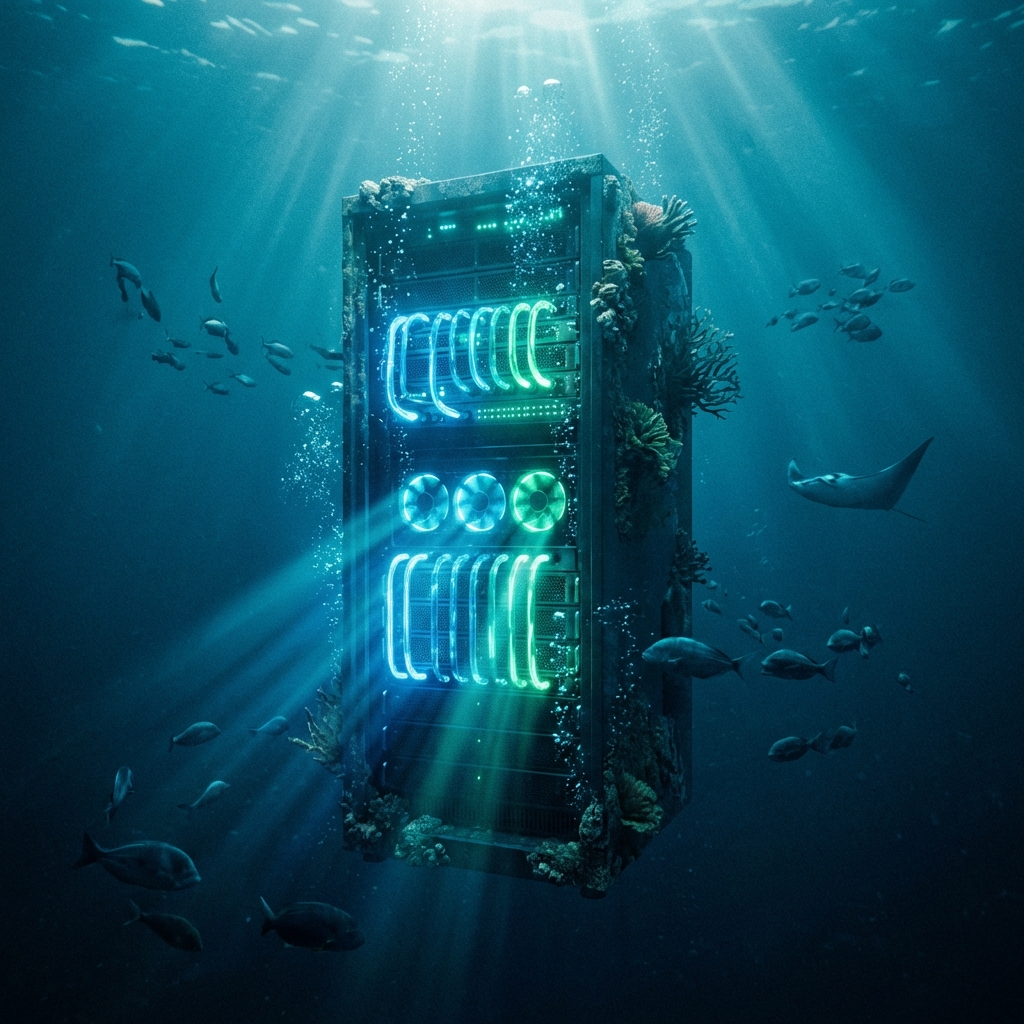
In October 2025, China completed the world's first commercial underwater data center powered by offshore wind. Submerged 35 meters below the surface near Shanghai, it uses ocean currents instead of energy-intensive air cooling. The result? Up to 90% reduction in cooling energy consumption.
This isn't a pilot. It's commercial-scale infrastructure serving China Telecom and state-owned AI computing companies. And it's part of a broader government mandate requiring all new large data centers to achieve power usage effectiveness (PUE) below 1.25 by the end of 2025.
Meanwhile, China's liquid-cooled server market reached $2.37 billion in 2024—a 67% year-over-year increase—with projections to hit $16.2 billion by 2029. Alibaba's "soaking server" immersion cooling has reduced data center energy use by 70% compared to traditional air-cooled facilities.
The environmental impact of AI is real. But it's being addressed at unprecedented speed precisely because the stakes are so high. The same exponential improvement curve that's increasing AI capability is also driving efficiency breakthroughs in data center cooling, renewable energy integration, and chip design.
The question isn't "AI or the environment." It's "how do we deploy AI in service of regeneration while the technology itself becomes cleaner?"
Organizations like GainForest are already showing what this looks like: AI that increases the capacity of indigenous communities to protect forests, with the computational overhead offset by actual carbon sequestration and ecosystem protection.
🌍 Green AI Tools
- CodeCarbon: A tool to track and reduce the carbon footprint of your transformative computing and AI models.
- ML.Energy: A leaderboard and framework for benchmarking the energy consumption of large language models.

The real blockers (and they're not technical)
Most AI readiness assessments measure the wrong things. They score your data infrastructure. Your technology stack. Your talent capabilities.
Those matter. But they're not what kills AI initiatives.
What kills AI initiatives:
Fear. A 2025 study found that 31% of employees actively undermine their company's AI initiatives. They refuse designated tools. They input poor data deliberately. They slow-roll projects. This isn't Luddite behavior—it's rational self-preservation. Nobody wants to automate themselves out of a job with no upside.
Misaligned incentives. Consulting firms sell hours, not outcomes. 70% of consultant-led AI initiatives underperform or fail. That's not a bug—it's a feature of their business model.
Top-down imposition. Organizations that succeed at AI don't push it down from leadership. They invite teams to identify opportunities, measure impact, and share the gains.
The organizations winning at AI aren't the ones with the best technology. They're the ones with the best culture.
The vibe coding revolution
There's a term circulating in developer circles: vibe coding. Andrej Karpathy (former Tesla AI lead) coined it in February 2025:
"There's a new kind of coding where you fully give in to the vibes, embrace exponentials, and forget that the code even exists."
What's actually happening: Advanced AI can now generate production-grade code from plain-language descriptions. Not prototypes. Not demos. Real, deployed systems built in weeks instead of months.
But here's what the hype misses: vibe coding only works in organizations ready to receive it.
If your culture is built on control, handoffs, and silos—AI tools make things worse, not better. You get faster production of the same dysfunction.
If your culture is built on autonomy, trust, and shared purpose—AI tools amplify what's already working.
⚡ Vibe Coding Tools
- Opencode: An AI code editor that allows you to build software by describing what you want in plain language.
- Google Antigravity: An AI code editor that allows you to build software by describing what you want in plain language.
- Cursor: An AI code editor that allows you to build software by describing what you want in plain language.
- Replit Agent: An autonomous agent that can build and deploy full-stack applications from a single prompt.
- v0: A generative user interface system by Vercel that turns text descriptions into production-ready UI code.

What to do now
The 8-month window is real. Here's how to use it:
Start with assessment, not tools. Not a generic maturity model with 20 dimensions. A focused assessment that answers: Where are you actually ready to deploy AI? What specific organizational gaps are blocking adoption? What's it going to cost (time and money) to fix each gap?
I built an AI Readiness Assessment for organizations genuinely curious about where they stand. It takes 3-5 minutes. You get real numbers, not marketing. No sales pitch—just answers.
Address culture before technology. Is this an organization where people feel safe to experiment? Where they'd share the upside of AI-driven efficiency rather than fear it? If not, that's your first work.
Start with one real project, not "AI strategy." Pick something concrete. Ship something. Learn from the deployment, not from planning documents.
Consider immersive learning. I run small cohorts—often in nature, in Morocco or Portugal—where founders learn vibe coding techniques while stepping outside their normal patterns. There's something about removing yourself from context that accelerates transformation.
Imagine 100x. Spend real time with the question: if you had 100x the capacity, what would you build? Who would you serve? What problems would you finally solve?

The invitation
By 2027, AI adoption will be the primary competitive advantage in most sectors—including impact.
The organizations doing the most important work on the planet deserve access to the most powerful tools available. Not to become extractive. Not to lose their soul. But to amplify their impact at the scale our challenges require.
The regenerative future isn't going to be built by organizations using 2020 tools to solve 2030 problems.
If you're a founder or leader doing work that matters—regenerative agriculture, climate tech, indigenous rights, community resilience—the AI transformation isn't optional. It's the difference between relevance and irrelevance.
The window is 8-16 months. After that, catching up becomes exponentially harder.

Ready to transform
your organization?
Take the free AI Readiness Assessment and get a personalized report on your team's capability to adopt AI.
Or reach out directly if you want to explore what an immersive cohort might look like.
The future is being built right now. Let's make sure it's being built by the people who actually care about the planet.
John Ellison is a founder, angel investor and startup consultant who's been building impact startups for the last 16 years. He works with mission-driven organizations to transform their operations with AI often through immersive cohorts in Morocco and Portugal. Take the assessment at john-ellison.com/ai-transformation, or subscribe to follow along as he documents this work in public.
Peace be with you 🙏


