


Season One

Leading the AI Transition

A podcast for the people building AI and the leaders bringing it into their companies, with Indigenous wisdom at the center.

Indigenous wisdom

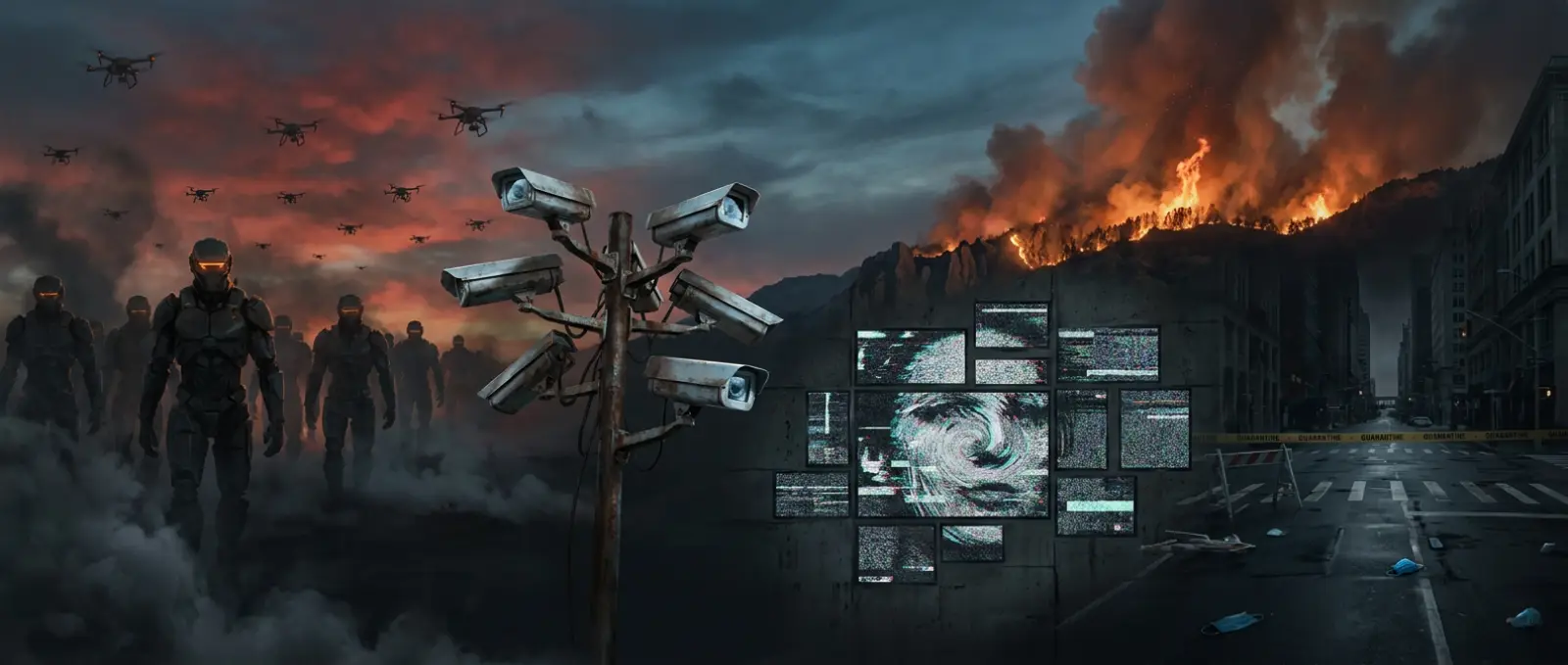
The key to an AI transition that doesn’t destroy us.

37.8% to 51.4%

of respondents “gave at least a 10% chance to advanced AI leading to outcomes as bad as human extinction.”

The survey asked 2,778 researchers who had published in top-tier AI venues. The share depends on how the question was worded.

Grace et al., Thousands of AI Authors on the Future of AI (AI Impacts, January 2024)

Most people building AI have never heard what Indigenous wisdom has to say about it. This season puts them in the same room.

The builders and the wisdom keepers

The people building AI can’t agree on how dangerous it is. Indigenous elders and scholars are asking a different question: how to build it in right relation, answerable to the people and places it draws from.

Portrait of Elon Musk
“And mark my words, AI is far more dangerous than nukes. Far.”
Elon MuskCEO, Tesla and SpaceX; co-founder, xAISXSW 2018, reported by CNBCPhoto: Gage Skidmore, CC BY-SA 4.0
Portrait of Suzanne Kite
“It is necessary to build our technologies, and all things, in a ‘Good Way’, a way which takes into account all beings, animate and inanimate.”
Suzanne KiteOglála Lakȟóta; director, Wiháŋble S’a Center for Indigenous AI, Bard CollegeIndigenous Protocol and AI Position Paper, 2020Photo: Bard College, Press photo, used with credit
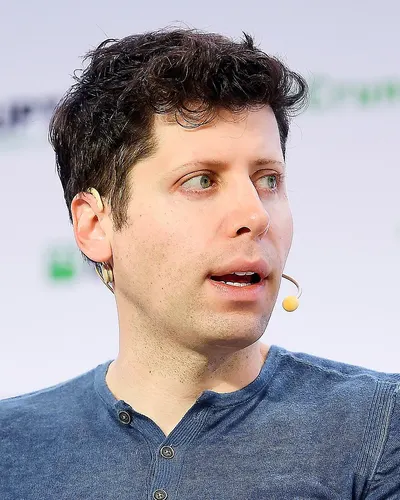
Portrait of Sam Altman
“We are past the event horizon; the takeoff has started.”
Sam AltmanCEO, OpenAIThe Gentle Singularity, 2025Photo: TechCrunch, CC BY 2.0
Portrait of Peter-Lucas Jones
“Data is the new land. Having had our land taken off us, and the experience of language loss in our family, we take data sovereignty very seriously.”
Peter-Lucas JonesTe Aupōuri, Ngāi Takoto, Te Rarawa; CEO, Te Hiku MediaITU News, 2022Photo: ACE Aotearoa, Official photo, used with credit
Portrait of Dario Amodei
“I think that most people are underestimating just how radical the upside of AI could be, just as I think most people are underestimating how bad the risks could be.”
Dario AmodeiCEO, AnthropicMachines of Loving Grace, 2024Photo: TechCrunch, CC BY 2.0
Portrait of Angie Abdilla
“The ethics of the system are part of the system itself. It’s not another layer that is slapped on at the end or another sort of layer within a stack, a technology stack.”
Angie Abdillapalawa; Professor, ANU School of Cybernetics; founder, Old Ways, NewUNSW Centre for IdeasPhoto: ANU School of Cybernetics, Official photo, used with credit
Portrait of Demis Hassabis
“I sometimes describe it, quantify it as 10 times the impact the Industrial Revolution was, 10 times faster.”
Demis HassabisCEO, Google DeepMind; Nobel laureate in ChemistryStanford GSB, 2026Photo: John Sears, CC BY-SA 4.0
Portrait of Noelani Arista
“Will computer memory replace experts and elders as repositories of knowledge, for example, supplanting human (maoli) relationality?”
Noelani AristaKanaka Maoli; historianIndigenous Protocol and AI Position Paper, 2020Photo: Noelani Arista, CC BY-SA 4.0
Portrait of Fei-Fei Li
“There’s nothing “artificial” about AI. It’s inspired by people, it’s created by people, and … it impacts people.”
Fei-Fei LiProfessor, Stanford; co-director, Stanford HAIHouse Science Committee testimony, 2018Photo: ITU Pictures, CC BY 2.0
Portrait of Shani Gwin
“If we encourage AI to think about reconnection with humans, animals, nature and the land, it might not be as extractive.”
Shani GwinMétis; founder and CEO, pipikwan pêhtâkwanPolicy Options, 2026Photo: pipikwan pêhtâkwan, Official photo, used with credit
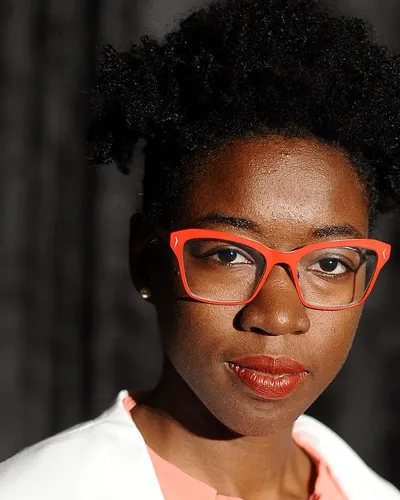
Portrait of Joy Buolamwini
“When people’s lives, livelihoods, and dignity are on the line, AI must be developed and deployed with care and oversight.”
Joy BuolamwiniFounder, Algorithmic Justice LeagueTIME, 2019Photo: Niccolò Caranti, CC BY-SA 4.0
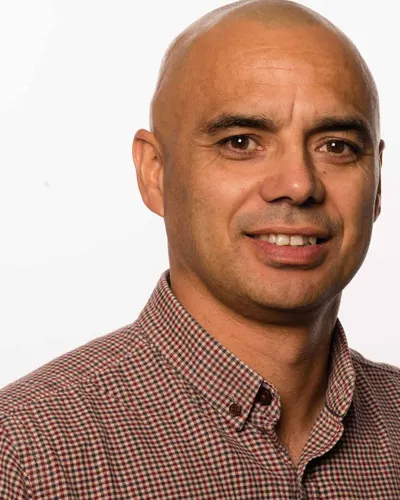
Portrait of Hēmi Whaanga
“AI will be a game changer that challenges the foundations of our knowledge systems.”
Hēmi WhaangaNgāti Kahungunu, Ngāi Tahu, Ngāti Mamoe, Waitaha; co-director, Abundant IntelligencesIndigenous Protocol and AI Position Paper, 2020Photo: DASSH, Official photo, used with credit
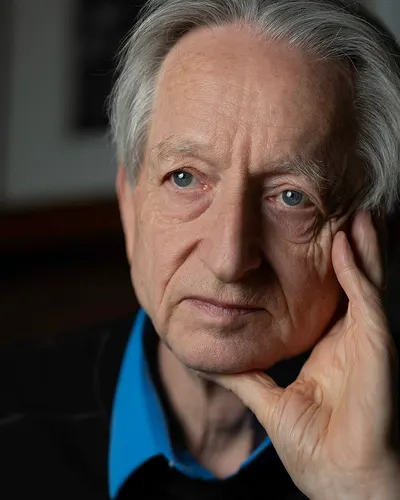
Portrait of Geoffrey Hinton
“There is also a longer term existential threat that will arise when we create digital beings that are more intelligent than ourselves. We have no idea whether we can stay in control.”
Geoffrey HintonNobel laureate in Physics; Professor Emeritus, University of TorontoNobel banquet speech, 2024Photo: Cmichel67, CC BY-SA 4.0
“The danger is not a conscious machine. The danger is an unconscious people holding great power.”
Kogui elders, ColombiaFrom “An Urgent Message on Artificial Intelligence from the Kogui People,” assembled from the words of Mamo Vangelio Moscote Alberto and Saka Rosa Mamatacán Sauna of the Ezuama Mayor Kuamaka.Read the full statementFootage from SLICE, “The Kogi People” (2025), YouTube standard license, used with credit

Four parts of every transition. One strand runs through them all.

People

What do your people feel when AI shows up at work, and do you know?

“When it comes to job security, 58% of workers are worried, yet less than one-third of CxOs feel job displacement is a concern for people.”
Accenture, Work, workforce, workers: Reinvented in the age of generative AI (2024)
“over half (57%) of employees say they hide their use of AI and present AI-generated work as their own.”
University of Melbourne and KPMG, Trust, attitudes and use of artificial intelligence: A global study (2025)

Technology

Where does the hard part of an AI rollout actually sit?

“about 70% of the challenges relate to people and process, about 20% are technology issues, and only 10% involve AI algorithms”
Boston Consulting Group, Where's the Value in AI? (2024)
“darker-skinned females are the most misclassified group (with error rates of up to 34.7%). The maximum error rate for lighter-skinned males is 0.8%.”
Joy Buolamwini and Timnit Gebru, "Gender Shades," Proceedings of Machine Learning Research 81 (2018)

Governance

Is your AI governance a fence, or a relationship?

“Desk workers at companies that have defined AI guidelines are nearly six times more likely to have tried AI tools, compared with desk workers whose companies have no guidelines around AI usage.”
Slack Workforce Lab, "New Slack research shows accelerating AI use at work" (2024)
“In order to truly create public benefit, we need mechanisms of accountability.”
Rumman Chowdhury, "AI Desperately Needs Global Oversight," WIRED (2023)

Finance

What counts as a return, and over what horizon?

“More than half (56%) say their company has seen neither higher revenues nor lower costs from AI, while only one in eight (12%) report both of these positive impacts.”
PwC, 29th Global CEO Survey (2026)
“Companies we work with have found that for every dollar spent on technology, four are spent on people and process.”
Bain & Company, The AI-Native Enterprise: Absorption Is the New Advantage (2026)

Wisdom

What would AI look like if it answered to the people whose knowledge it's built from?

Sierra Nevada de Santa Marta at dusk. Footage: Sun Nation, used with permission.

Portrait of Suzanne Kite
“When this concept is applied to AI, Seven Generations means that the protocols outlined here are a way to plan for not just the AI of tomorrow, but for Seven Generations of AI into the future.”
Suzanne Kite (Oglala Lakota) et al., "How to Build Anything Ethically," Indigenous Protocol and Artificial Intelligence Position Paper (2020)Photo: Bard College
Portrait of Peter-Lucas Jones
“Our data would be used by the very people that beat that language out of our mouths to sell it back to us as a service”
Peter-Lucas Jones, chief executive of Te Hiku Media, quoted in MIT Technology Review (2022)Photo: ACE Aotearoa
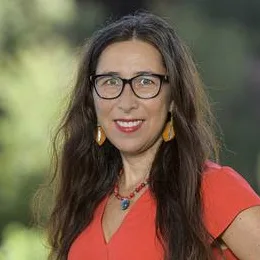
Portrait of Stephanie Russo Carroll
“The ‘CARE Principles for Indigenous Data Governance’ … empower Indigenous Peoples by shifting the focus from regulated consultation to value-based relationships”
Stephanie Russo Carroll et al., "The CARE Principles for Indigenous Data Governance," Data Science Journal (2020)Photo: Kris Hanning, U of A Health Sciences

What Season One sounds like

Kogui elders, Indigenous technologists and scholars, and the people working alongside them, on what AI takes and what it owes. In their own words. The season is built around short clips like these.

Excerpts from public talks are credited to the speaker and linked to the full source. Quotes are verbatim.

The wisdom strand starts here

From Web 3 to Indigenous Prophecy: Building AI With The Arhuaco

Tiamoesg “Dion” Steele came out of Web3 and ended up building governance tools with Arhuaco leaders in Colombia's Sierra Nevada de Santa Marta. We talk about who asked for the work, where the data sits, who touches the money, and whether AI can serve people who don't use screens.

What's said about the Arhuaco is Dion's account of his work with them, not their own words.

Footage: Sun Nation, used with permission

From the archive: the ReFi Podcast

My earlier show, on how crypto can pay for climate action, with builders from the regenerative finance movement.

Who should be in this conversation?

I'm looking for people who build AI, people who lead with it, and knowledge holders who think about what it should answer to. Tell me who, or tell me about your own work.

Suggest a guest

Who do you have in mind? A profile link and a line on why is plenty.

Where can I find them? At least one

It comes straight to my inbox. Nothing here is published.

Footage from SLICE, "The Kogi People" (2025)

Hear when new episodes land

My newsletter, with new episodes and the writing that goes with them.